
For adults and kids alike, it can feel frightening to try something new, but confidence isn’t built by avoiding every uncertain moment. It’s built by walking into something unfamiliar and coming out the other side.
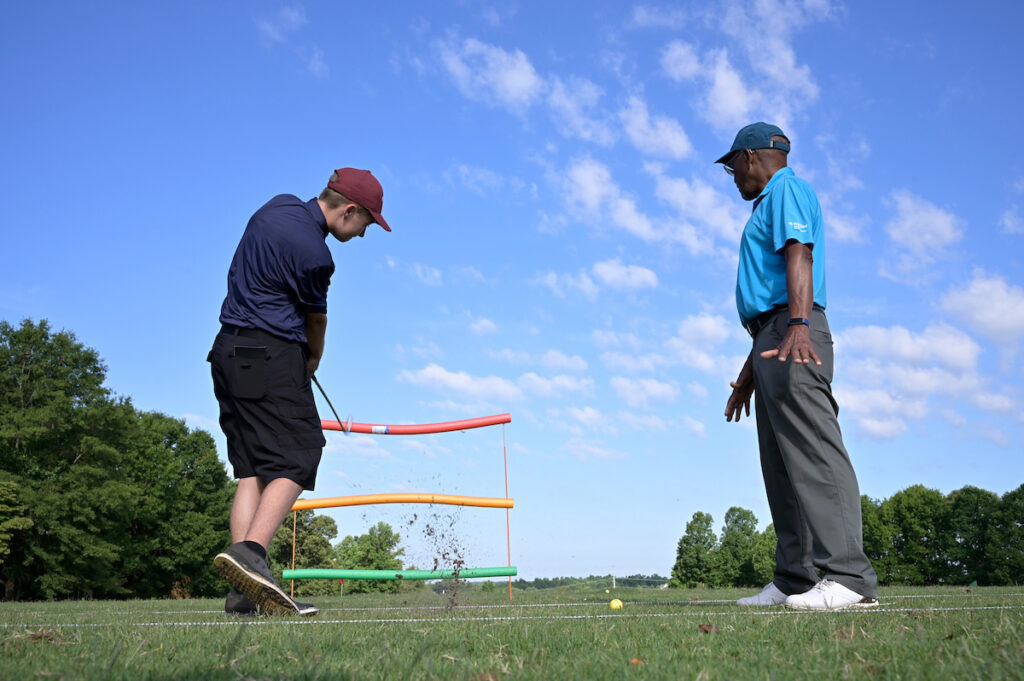
First Tee coaches are trained to meet every participant where they are, then gently stretch what they believe is possible. They use games and activities than can be altered based on a player’s abilities, said Derek Clemmensen, director of programs at First Tee – Naples/Collier and a member of First Tee’s national Programs Council.
“If a youth is more advanced, we add layers to the challenge,” he explained. “In a chipping game, for example, we might ask them to pick their landing spot ahead of time instead of only focusing on where the ball finishes. If a participant is newer to the game, we broaden the target or simplify the task so they feel successful while they build that skill. The goal is the same for everyone: Each kid is stretched just enough to grow, and no one is stuck feeling bored or in over their head.”
Participants learn the three “I am” statements to help build positive self-identity:
- I am finding my self-confidence.
- I am discovering what I’m capable of.
- I am safe to be myself.
“At First Tee, our coaches are trained to create an environment where kids feel safe, and that safety is what makes it possible for them to take on a challenging skill,” Clemmensen said. “They know their coaches and their peers are supporting them, so the uncomfortable moment still feels safe.”
Keep the goal attainable. Healthy risk-taking works best in small, manageable doses. A child who has never liked crowds doesn’t need to make it through the biggest haunted house in town to practice courage. Visiting a few neighbors for candy is its own accomplishment, and it’s more likely to leave your child with a positive memory of stepping outside of their comfort zone.
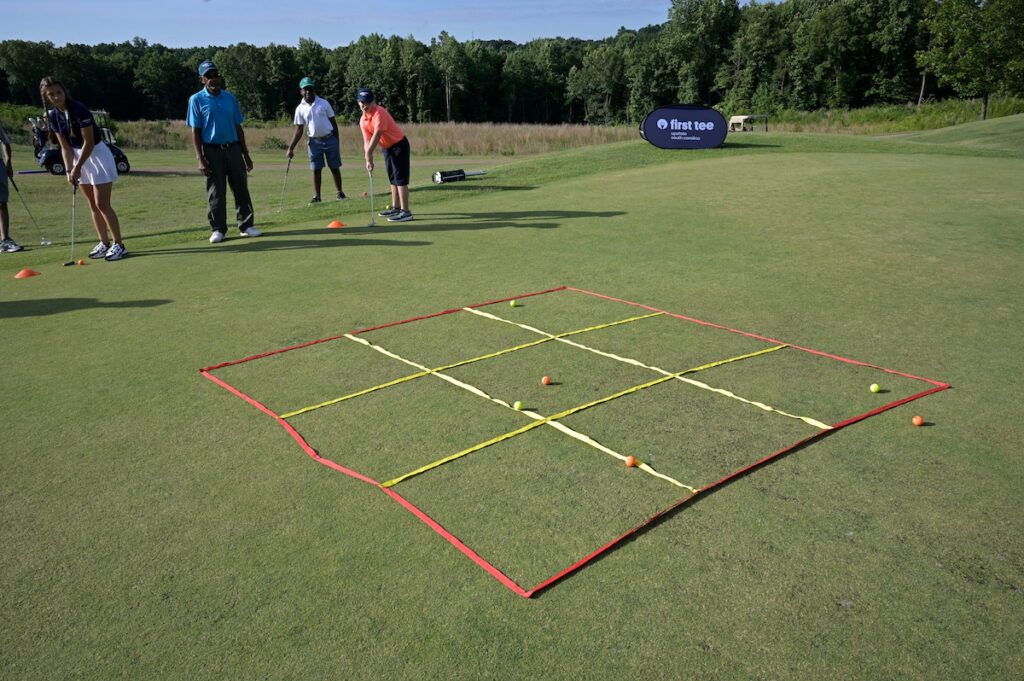
Resist rescuing too early. “Feeling uncomfortable is a normal part of trying something new or difficult, and it’s often where the most growth happens,” Clemmenen said.
If a child hesitates at a neighbor’s door on Halloween or wants to turn back on the haunted trail, don’t force it. But it’s important to recognize that there’s a difference between genuine distress and productive discomfort. Most of Halloween’s risk lives in the second category, exactly where confidence gets built.
Follow with a debrief. “What was the scariest part, and how did you get through it?” It’s a quick conversation that reinforces to your child that they can handle new experiences. It turns a one-time thrill into a repeatable strategy for the next unfamiliar situation — a new school year, a new team or a new challenge on the course.
Find a First Tee program near you or learn about supporting our efforts to help kids build confidence and grow into game changers.
